-
“Remember to look up at the stars and not down at your feet. Try to make sense of what you see and wonder about what makes the universe exist. Be curious. And however difficult life may seem, there is always something you can do and succeed at. It matters that you don’t just give up.”

– Professor Stephen Hawking (8 January 1942 – 14 March 2018) Dr. Stephen Hawking, a professor of mathematics at the University of Cambridge, delivers a speech entitled “Why we should go into space” during a lecture that is part of a series honoring NASA’s 50th Anniversary, Monday, April 21, 2008, at George Washington University’s Morton…
-
“I’ve loved the stars too fondly to be fearful of the night.”

Galileo Galilei (15 February 1564 – 8 January 1642) (Sarah Williams, Poet – December 1837 – 25 April 1868) This quote is often attributed to Galileo, incorrectly. The full poem, with that line, is quoted and fully credited below. Galileo was an Italian astronomer, physicist and engineer who studied speed and velocity, gravity and free…
-
“The purpose of life is the investigation of the Sun, the Moon, and the heavens.”
— Anaxagoras (499 BC – 428 BC) Anaxagoras was a Greek mathematician, and he was imprisoned for proposing that the moon shines by reflected light from the “red-hot stone” which was the sun, the first such recorded claim. He went on to take the next step and become the first to correctly explain the reason…
-
Have you ever wondered how we know the Earth is round?
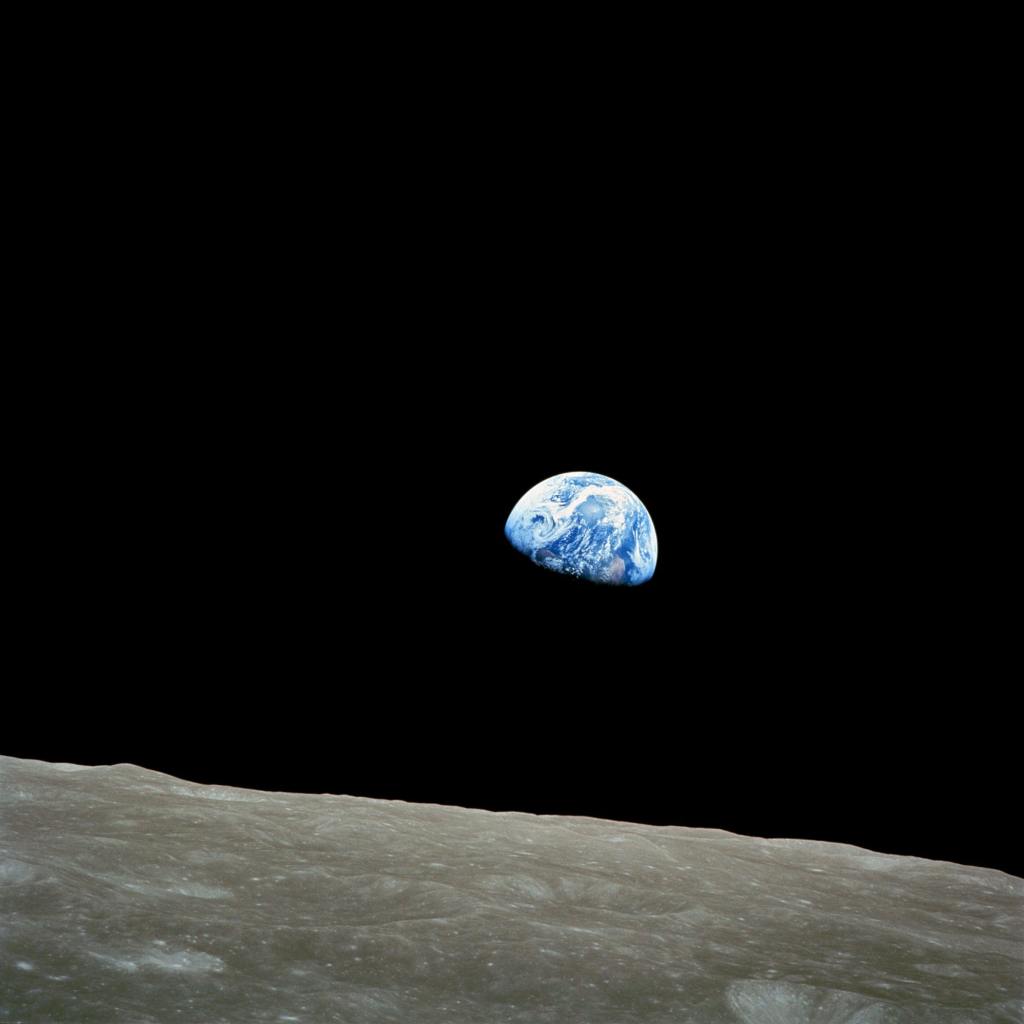
Because we have photos taken from space, duh! I hear you say. True, but how did we know before space flight? Of course, the Earth isn’t round, it’s more technically accurate to say that it’s an oblate spheroid, though from space it just looks like a big blue ball. Credit Look out your window and…
-
“Look at the stars. It won’t fix the economy. It won’t stop wars. It won’t give you flat abs, or even help you figure out your relationship. But it’s important. It helps you to remember that you and your problems are both infinitesimally small and conversely, that you are a piece of an amazing and vast universe.”
― Kate Bartolotta Apparently, Kate is a wellness cheerleader, yogini storyteller, and self-care maven, whatever that means. She also writes, books and for various publications. The stars can make us feel small and unimportant but, as Kate so rightly says, we are part of the whole, connected and separate, as important and as necessary as…
-
“The Earth is the cradle of humanity, but mankind cannot stay in the cradle forever.”
– Konstantin Tsiolkovsky (17 September 1857 – 19 September 1935) Tsiolkovsky is remembered for believing in the dominance of humanity throughout space. He had grand ideas about space industrialization and the exploitation of its resources. Long before the beginning of the space era, this Great Russian scientist derived a formula for space rockets’ overcoming the…
-
“We are stardust, billion-year-old carbon”
– Joni Mitchell, Canadian-American musician, producer, and painter At the dawn of the universe, there was a whole lot of hydrogen and helium, a little bit of lithium, and not much else. This is consistent with the standard or “big bang” model. Between 12 and 13 billion years ago, massive amounts of hydrogen and helium…
-
“Humanity has the stars in its future, and that future is too important to be lost under the burden of juvenile folly and ignorant superstition.”
— Isaac Asimov (2 Jan 1920 – 6 Apr 1992) American author (of Russian parentage) and professor of biochemistry at Boston University who was a prolific author and editor of science fiction and non-fiction. He was a regular commentator on science and society and atheism and was known for creating the three laws of robotics.…
-
“Watch the stars in their courses and imagine yourself running alongside them”
—Marcus Aurelius, Meditations, 7.47[Holiday, Ryan; Hanselman, Stephen. The Daily Stoic (p. 131). Profile. Kindle Edition.] The stars in the sky have the ability to fill us with awe and wonder. The stars are distant sparks glowing in the night sky embedded in the cloth of the universe. The stars, unimaginably huge and old, reach out…
-
Space elevators – for Mars
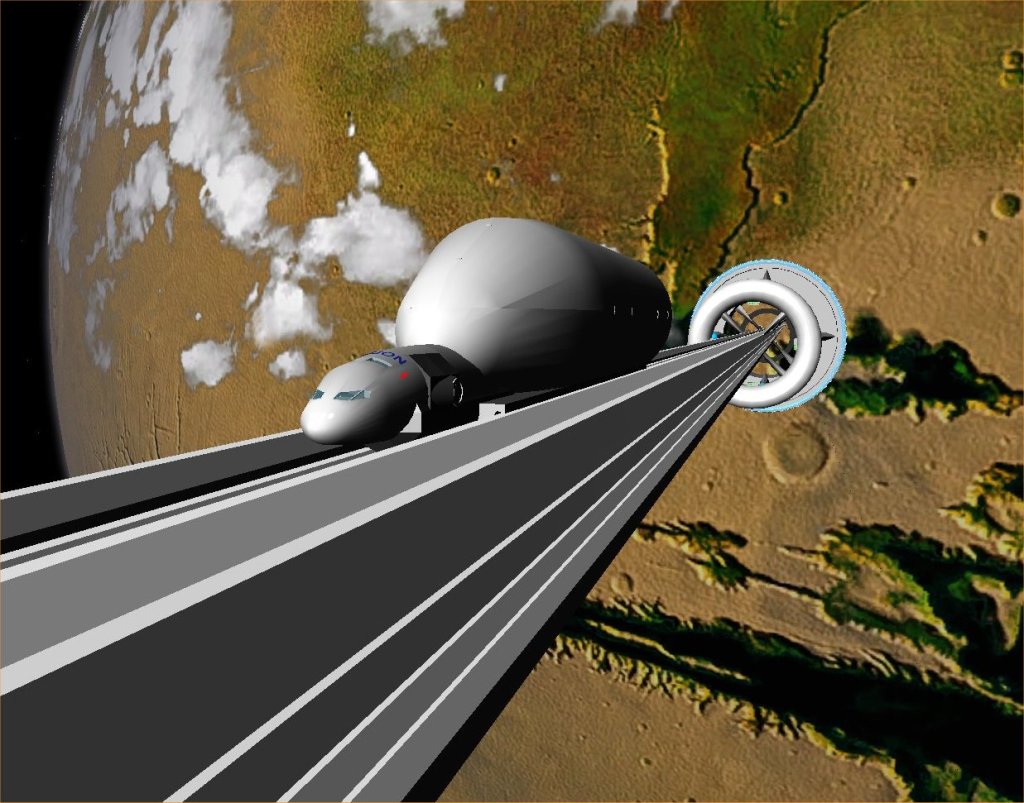
https://www.flickr.com/photos/flyingsinger/471698669 Space elevators aren’t just for Earth. The possibility of a space elevator on Mars has been around for a few years, with various academics and science fiction authors covering the concept. There are different problems with the Martian space elevator – due to its satellites, Phobos and Deimos, as their orbits would intersect with…

Stargazing Guy
Connecting people to the Stars
-
“Distribution Is Survival. Expansion Is Progress.”
– Alex Ioskevich (LinkedIn) Alex Ioskevich, of (amongst other things) Quantum Propulsion Technologies Ltd, goes on to state that “every scalable system distributes its load. Biological life spreads across ecosystems. Digital systems distribute across networks. Resilient economies diversify across geography.Civilization is no different. ___________________________________________________________ His insight to this simple and insightful observation is full of…
-
“Science Fiction Is a Self-Fulfilling Prophecy.”
– Peter H. Diamandis, Metatrends substack, 17 July 2026 Why are people so pessimistic about the future – and view the past as some form of pastoral utopia? On these pages we promote hope – not cope or mope. Hope lives here. An interesting insight is from Peter H. Diamandis in his substack, where he…
-
“I believe in evidence.”
– Isaac Asimov, The Roving Mind (1997), (2 January 2 1920 – 6 April 1992) Scientist and science fiction author Asimov’s output of novels and books popularising and explaining science was prodigious. As a rationalist he often railed against superstitious and pseudoscientific beliefs that tried to pass themselves off as genuine science and had this…
-
What is a light-year?
A light-year is a measure of distance – not time (or anything to do with Disney’s Toy Story). It’s used to indicate the distance to stars and galaxies. It’s the distance light travels in one year in a vacuum, which is about: – 4.2465 light-years OR 5.88 trillion miles OR 9.46 trillion kilometres Light travels…
-
How far is that star?
Basically, far! The Sun is the closest (and brightest) star. It is about: – 93 million miles – 150 million kilometres The next closest star (Proxima Centauri) is invisible to the unaided human eye and you need to be in the Southern Hemisphere to see it with a telescope (it’s too dim to see with…
-
Death rates from disasters have fallen over the last century.
Good news. Recent data indicates that natural disasters are NOT going to kill us all. The global death rate from all natural disasters (drought, floods, storms, earthquakes, wildfires, extreme temperatures, etc.) has fallen by more than 90% over the last century. The total number of deaths has fallen substantially, despite there being four times as…

