
Category: Stargazing
-
What is a light-year?

A light-year is a measure of distance – not time (or anything to do with Disney’s Toy Story). It’s used to indicate the distance to stars and galaxies. It’s the distance light travels in one year in a vacuum, which is about: – 4.2465 light-years OR 5.88 trillion miles OR 9.46 trillion kilometres Light travels…
-
How far is that star?

Basically, far! The Sun is the closest (and brightest) star. It is about: – 93 million miles – 150 million kilometres The next closest star (Proxima Centauri) is invisible to the unaided human eye and you need to be in the Southern Hemisphere to see it with a telescope (it’s too dim to see with…
-
Be Part of a Global Stargazing Event
Project partners Go Stargazing and the Royal Astronomical Society are leading a free nationwide stargazing event. It is called 100 Hours Under One Sky. The event is aimed at beginners and is in collaboration with the International Astronomy Union and the British Astronomical Association. Complete four simple stargazing challenges to win virtual ‘badges’ and see…
-
Summer evening talk – “The Stars and the Planets … Stargazing for All” – 16 August 2023 @ 7:30 pm
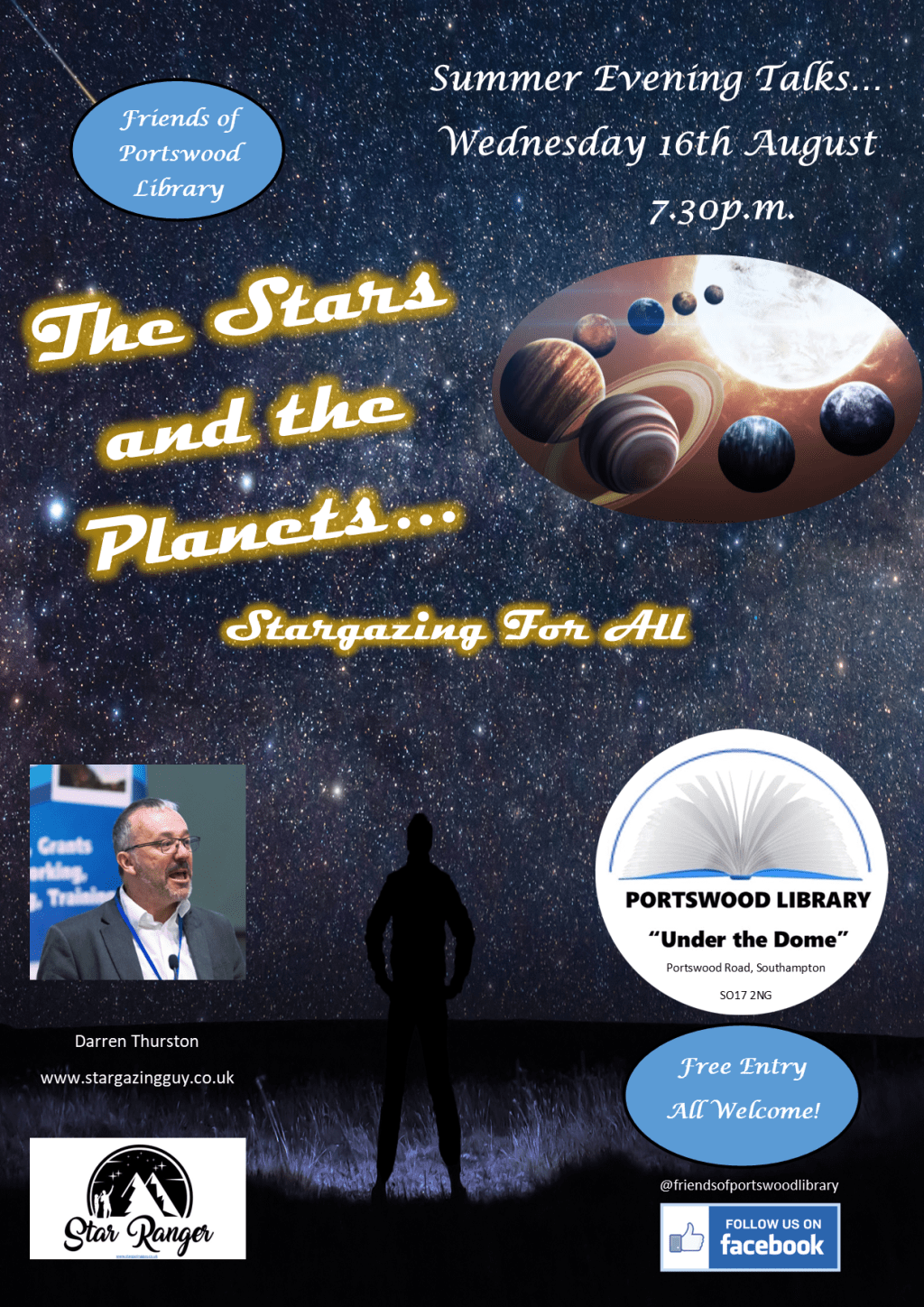
Portswood Library, ‘Under the Dome’, Portswood Road, Southampton, United Kingdom, SO17 2NG PS: I love coffee. BuyMeACoffee, leave a message with a date and time and we can share it, remotely, at the same time, and think about the Cosmos. In the meantime, take care of yourself and if you can, someone else, too, because as…
-
“At night the stars put on a show for free … And darling, you can share it all with me”

– Gerry Goffin, Carole King The great song writing duo Goffin and King with Up on the Roof, first recorded by Little Eva, the Drifters and many others. Do the lyrics “evinces a quiet sense of sadness, an urban dissatisfaction that moves beyond anything conceived by the rose-spectacled Tin Pan Alley writers of the early…
-
Are comets and shooting stars the same?
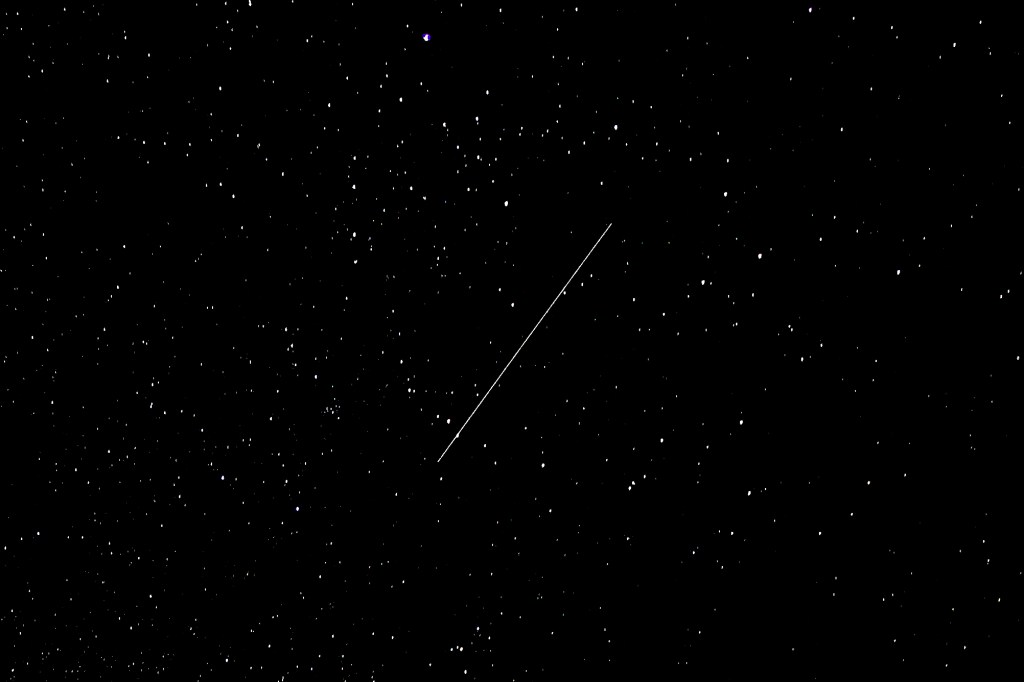
Caption: Perseid Meteor from UK 12-13 Aug 2021 (credit in ALT) I was asked this question during a recent talk on stargazing. Easy question to answer, was my first thought. I started with confirming that they were indeed different phenomena and went on to discuss where comets came from, their usual long orbits (unless they…
-
“Man must rise above the Earth—to the top of the atmosphere and beyond—for only thus will he fully understand the world in which he lives.”

– Socrates (469-399 BC) This quote appears in the Plato’s Dialogue, Phaedo, around 109e. The Greek text is: τὸ δὲ εἶναι ταὐτόν, ὑπ᾽ ἀσθενείας καὶ βραδυτῆτος οὐχ οἵους τε εἶναι ἡμᾶς διεξελθεῖν ἐπ᾽ ἔσχατον τὸν ἀέρα: ἐπεί, εἴ τις αὐτοῦ ἐπ᾽ ἄκρα ἔλθοι ἢ πτηνὸς γενόμενος ἀνάπτοιτο, κατιδεῖν ἂν ἀνακύψαντα, ὥσπερ ἐνθάδε οἱ ἐκ τῆς…
-
“There are no borders or boundaries on our planet …”

– Frank White, Author, Space Philosopher, Consultant William Shatner cried upon returning from space. The “overview effect” explains why. The “overview effect”, experienced by astronauts when they view the Earth from outer space, irrevocably changes your perspective as a human. Coined by Frank White in 1987, the overview effect describes what the spaceflight experience, for…
-
If stargazing is for everyone, how do I start?
… at the beginning. Stargazing is a gateway to astronomy and astronomy is one of the few sciences that remains open to the amateur or citizen scientist – where real science can be conducted. For example, BOSS (more accurately, Backyard Observatory Supernova Search) are an amateur collaboration of 6 friends from Australia and New Zealand…
-
“If the stars should appear one night in a thousand years, how would men believe and adore …”
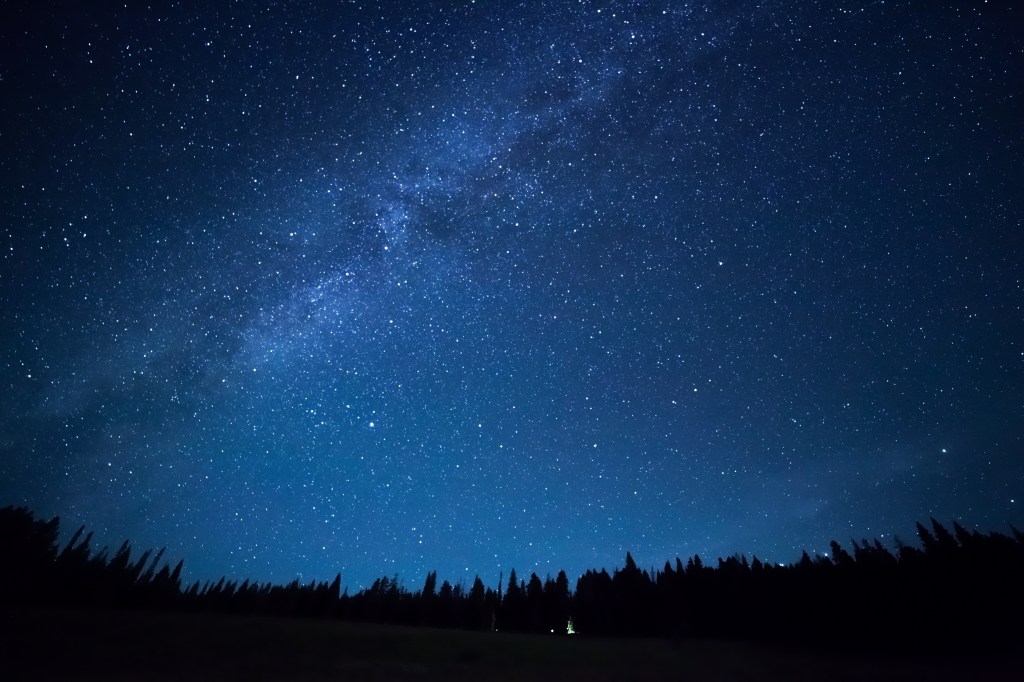
― Ralph Waldo Emerson (1803-1882), Nature and Selected Essays In his poem, Emerson puts forth the view that they would be regarded with great wonder and remembered and discussed for years to come. They would be recognized as a sign of God. Not every one agrees with this view, some think the human response would…

