-
“I don’t think the human race will survive the next thousand years unless we spread into space. There are too many accidents that can befall life on a single planet. But I’m an optimist. We will reach out to the stars.”

– Stephen Hawking (8 January 1942 – 14 March 2018) An extract from an interview by Roger Highfield in Daily Telegraph (16 October 2001) where Hawking says, “Colonies in space may be our only hope.” There are certainly a lot of accidents that could befall humanity – and not just the ones we think we…
-
NASA’s James Webb Space Telescope (JWST) images

For a change of pace, here are several of, the now famous images, taken by the JWST, since its launch on 25 December 2021 at 12:20 pm GMT. JWST took off from the Guiana Space Centre, also called Europe’s Spaceport, a European spaceport to the northwest of Kourou in French Guiana, a region of France in…
-
If stargazing is for everyone, how do I start?

… at the beginning. Stargazing is a gateway to astronomy and astronomy is one of the few sciences that remains open to the amateur or citizen scientist – where real science can be conducted. For example, BOSS (more accurately, Backyard Observatory Supernova Search) are an amateur collaboration of 6 friends from Australia and New Zealand…
-
“The most remarkable discovery in all of astronomy is that the stars are made of atoms of the same kind as those on the earth.”

– Richard P. Feynman (11 May 1918 – 15 Feb 1988) What is there to say about Richard Feynman, American theoretical physicist who was probably the most brilliant, influential, and iconoclastic figure in his field. His lifelong interest was in subatomic physics. In 1965, he shared the Nobel Prize in Physics for his work in…
-
“When we look out into space, we are looking into our own origins, because we are truly children of the stars.”
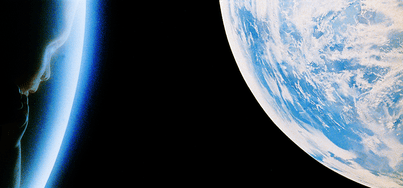
– Professor Brian Cox, Wonders of the Universe, BBC Why are we here? Where do we come from? These are the most enduring of questions. And it’s an essential part of human nature to want to find the answers. We can trace our ancestry back hundreds of thousands of years to the dawn of humankind.…
-
“Shoot for the stars but if you happen to miss, shoot for the moon instead.”

– Neil A Armstrong (5 August 1930 – 25 August 2012) The first human to stand on the Moon! What a guy! With Buzz Aldrin, and Michael Collins in lunar orbit, the first two human beings to stand somewhere that isn’t the Earth. Did he say the above quote? Whether he did or didn’t what does…
-
Comet Shoemaker-Levy 9
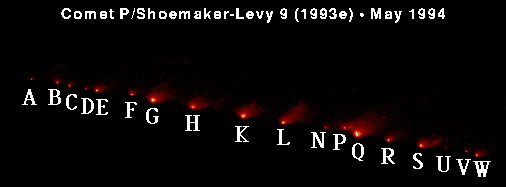
Discussing originality and plagiarism, Matthew Syed uses the release of two very similar movies in 1998, Armageddon and Deep Impact, as an example of how our brains are wired for unoriginality. He finds, in his Radio 4 series Sideways (available as a podcast), that we evolve as a collective brain, absorbing our shared cultural cues and looking…
-
“Because they are so long-lived, atoms really get around. Every atom you possess has almost certainly passed through several stars and been part of millions of organisms on its way to becoming you.”
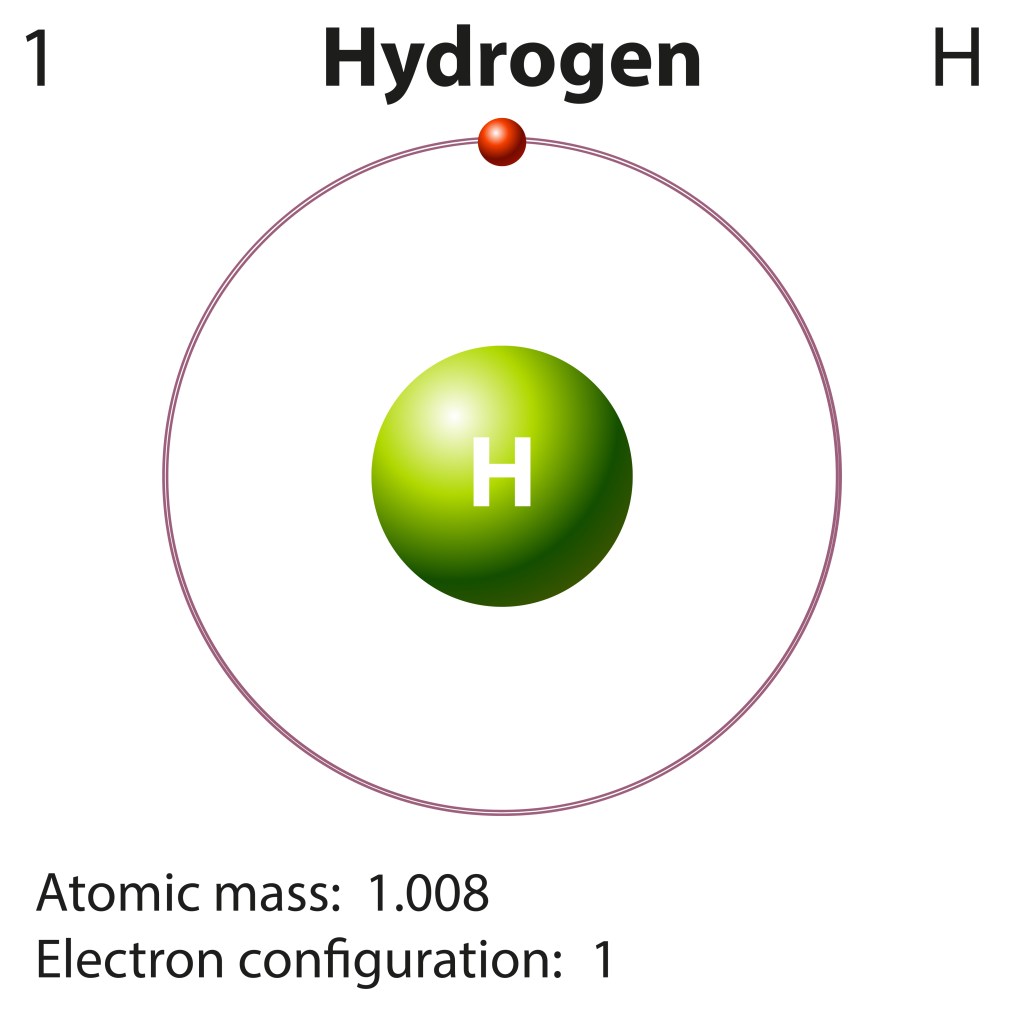
― Bill Bryson, A Really Short History of Nearly Everything The rest of the paragraph from his book is really awesome and inspiring, it goes: “We are each so atomically numerous and so vigorously recycled at death that a significant number of our atoms—up to a billion for each of us, it has been suggested—probably…
-
“Vita ex pulvis. We are made from the dust of dead stars.”
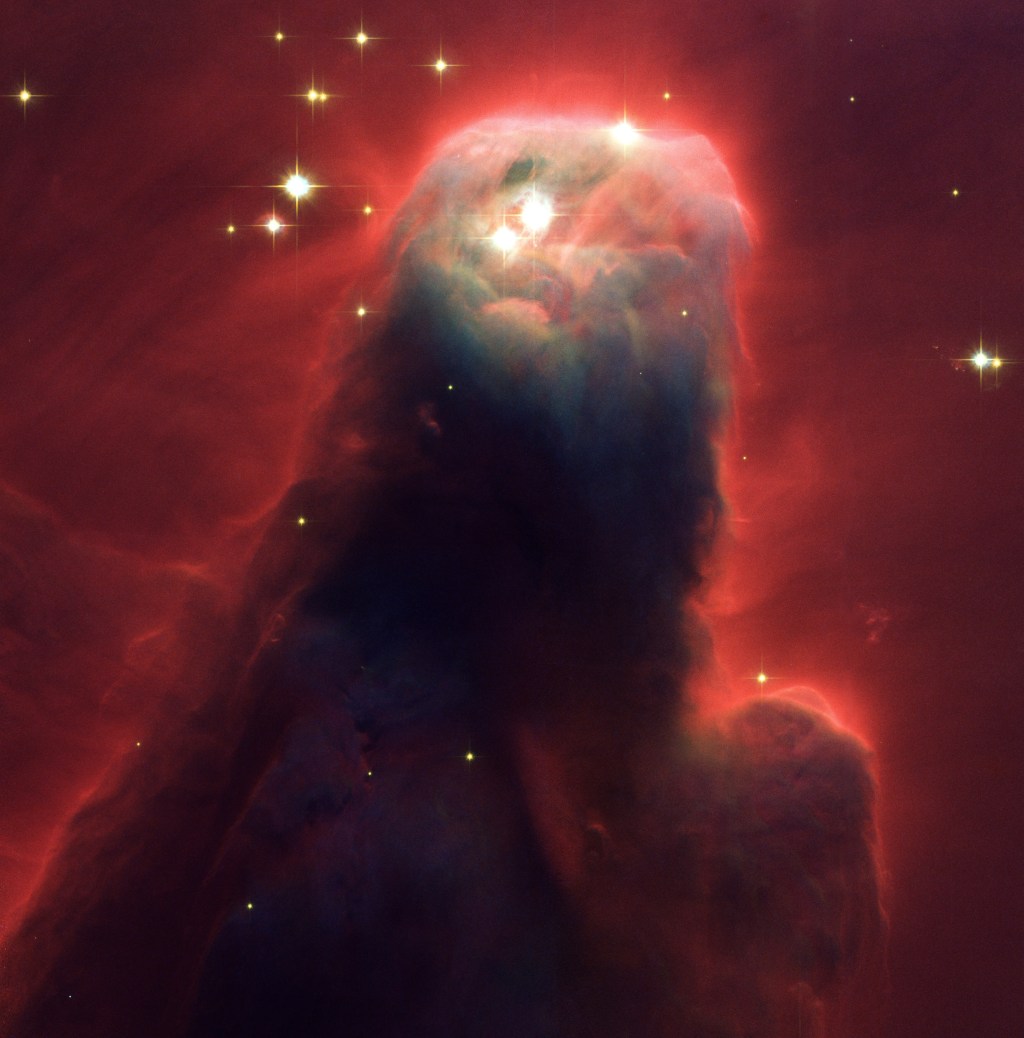
— Christopher Paolini, To Sleep in a Sea of Stars Go to the bottom of this post to read about this incredible image of the Cone Nebula Credit The full quote is: “Have you ever considered the fact that everything we are originates from the remnants of stars that once exploded?” Jorrus said, “Vita ex…
-
“Above me shone the stars, for the night was very clear.”

Wells, H.G.. The Time Machine: with Illustrations (Classic Collection Book 22) (p. 63). Kindle Edition. The great H.G. Wells, in The Time Machine, goes on to state: “I felt a certain sense of friendly comfort in their twinkling. All the old constellations had gone from the sky, however: that slow movement which is imperceptible in…

Stargazing Guy
Connecting people to the Stars
-
You Can Still Read NASA’s Deleted “First Woman” Graphic Novels
With thanks to Keith Cowing of NASAWatch.com Credit: https://nasawatch.com/education/you-can-still-read-nasas-deleted-first-woman-graphic-novels/ ____________________________________________________________________ The following is mainly taken from NASAWatch.com‘s page about this story. In 2021 NASA issued the first of two interactive comic books/graphic novels (“First Woman: Dream to Reality”) depicting young women dreaming of – and then training for – a future that would comprise the…
-
One Penny for Space
Will you sign the petition? I have. Credit: https://pennyforspace.vercel.app/ ____________________________________________________________________ One Penny for Space is a petition to ask the UK government to increase spending on space to 1%. Click on the badge below to learn more about the petition by Peter Hague of Plutocracy. ____________________________________________________________________ PS: I love coffee. BuyMeACoffee, leave a message with a…
-
Space and science-related puns & jokes no. 76
Everyone loves a pune (or pun) or a joke. Here follows more space and science-related puns/jokes – enjoy or groan or meh. More to follow! __________________________________________________________________ Q: If you know nothing about constellations at least learn Ursa MinorA: …that’s the bear minimum This will be the last pun/joke for a while – due to some…
-
Space and science-related puns & jokes no. 75
Everyone loves a pune (or pun) or a joke. Here follows more space and science-related puns/jokes – enjoy or groan or meh. More to follow! __________________________________________________________________ Q: Why are they called Hemorrhoids?A: Because Asteroids was already taken __________________________________________________________________ PS: I love coffee. BuyMeACoffee, leave a message with a date and time and we can In the…
-
Space and science-related puns & jokes no. 74
Everyone loves a pune (or pun) or a joke. Here follows more space and science-related puns/jokes – enjoy or groan or meh. More to follow! __________________________________________________________________ Apologies, yet another image/meme. If you can’t mix jokes/puns with memes … well you can and I have! __________________________________________________________________ PS: I love coffee. BuyMeACoffee, leave a message with a date…
-
Space and science-related puns & jokes no. 73
Everyone loves a pune (or pun) or a joke. Here follows more space and science-related puns/jokes – enjoy or groan or meh. More to follow! __________________________________________________________________ Apologies, yet another image/meme. Definitely a dad joke, too! If you can’t mix jokes/puns with memes/dad jokes … well you can and I have! __________________________________________________________________ PS: I love coffee. BuyMeACoffee,…
 Stargazing Guy