
― Bill Bryson, A Really Short History of Nearly Everything
The rest of the paragraph from his book is really awesome and inspiring, it goes:
“We are each so atomically numerous and so vigorously recycled at death that a significant number of our atoms—up to a billion for each of us, it has been suggested—probably once belonged to Shakespeare. A billion more each came from Buddha and Genghis Khan and Beethoven, and any other historical figure you care to name. (The personages have to be historical, apparently, as it takes the atoms some decades to become thoroughly redistributed; however much you may wish it, you are not yet one with Elvis Presley.) So we are all reincarnations—though short-lived ones. When we die our atoms will disassemble and move off to find new uses elsewhere—as part of a leaf or other human being or drop of dew. Atoms, however, go on practically forever.”
We are short-lived reincarnations – and immortal, at least in our component parts.
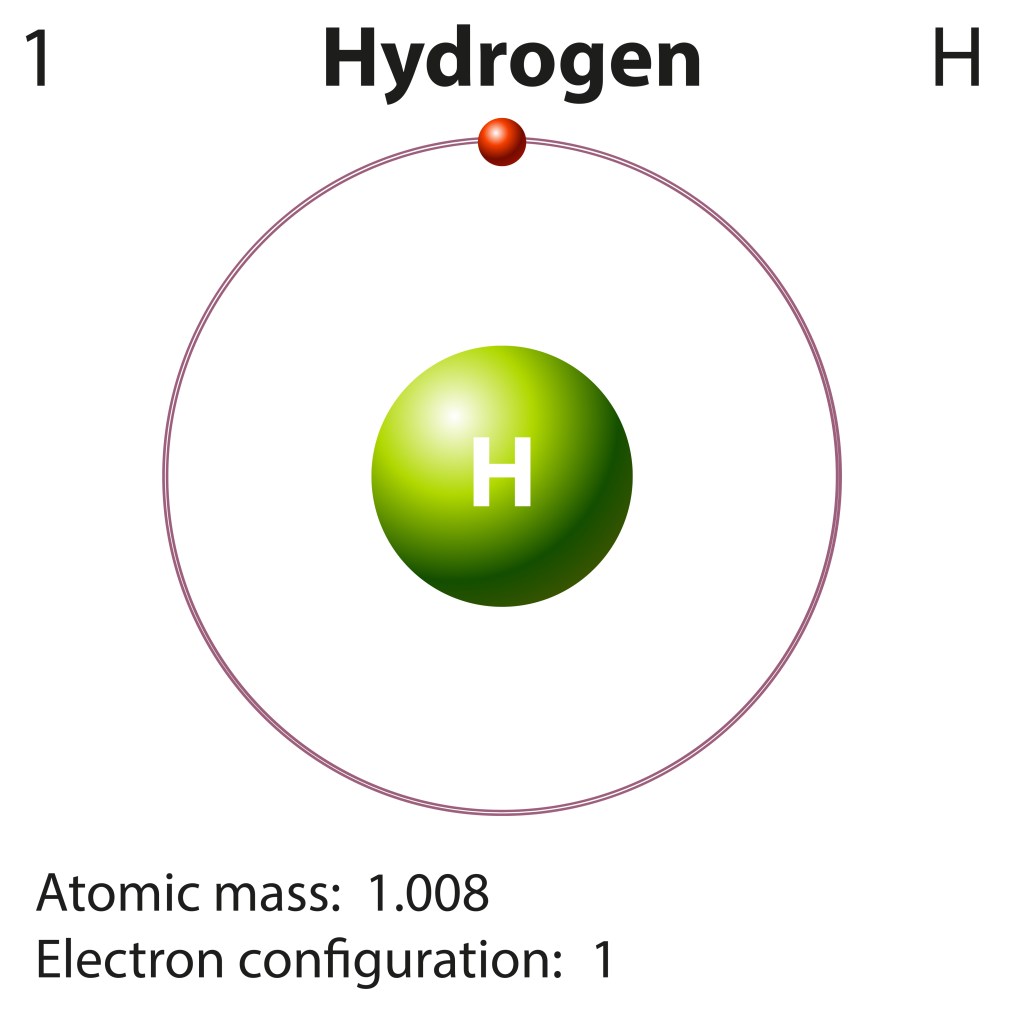
My last post was about being made from the dust of dead stars – apparently, we are more fundamental than even that. Atoms make up everything, literally (actually?) and we are made up of atoms. Nobody actually knows how long an atom can survive, but according to Martin Rees it is probably about 1035 years. How many years?!
1035 = 10 to the power of 35 = 1035 =
100,000,000,000,000,000,000,000,000,000,000,000
Remember, though, that the best estimate of the present age of the universe is the much smaller number of 1010 years (10 billion). How much longer will the universe last? The earliest possible end of the universe, based on some theories, is 22 billions years away.
For all practical purposes, atoms are forever.
Credit: By MarianSigler – Self-drawn using Inkscape and gedit, Public Domain, https://commons.wikimedia.org/w/index.php?curid=782781
For you to be here now, trillions of drifting atoms had somehow to assemble in an intricate and curiously obliging manner to create you.
Bill Bryson, A Really Short History of Nearly Everything
PS: I love coffee. BuyMeACoffee, leave a message with a date and time and we can share it, remotely, at the same time, and think about the Cosmos.
In the meantime, take care of yourself and if you can, someone else, too, because as Adam Smith said, “we naturally desire not only to be loved but to be lovely”.


Leave a Reply