
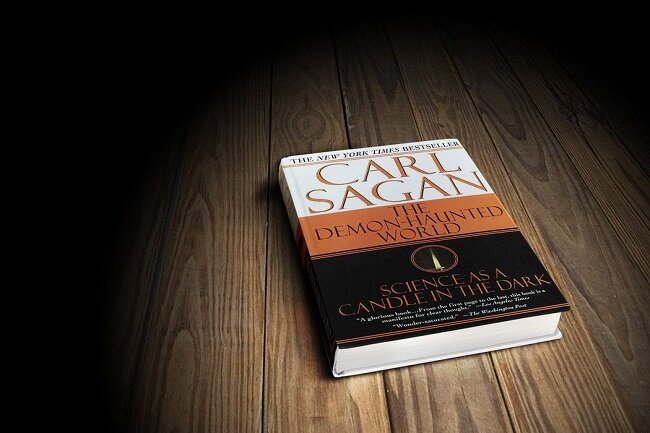
– Carl Sagan’s Fine Art of Baloney Detection, The Demon-Haunted World: Science as a Candle in the Dark
Here is the eighth tool.
When faced with two hypotheses that explain the data equally well, choose the simpler.
Otherwise known as ‘Occam’s Razor’, which is a convenient rule-of-thumb for selection when there is nothing separating the data.
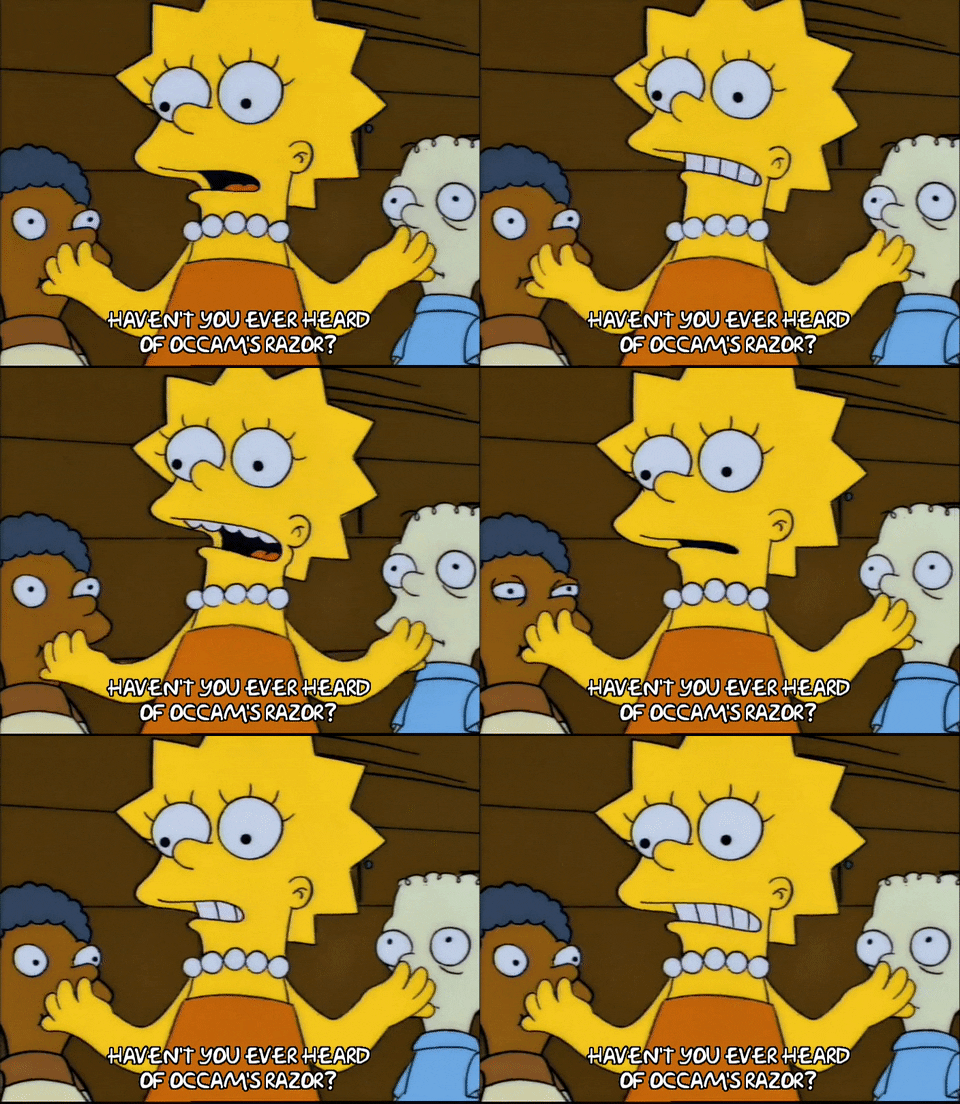
Credit: https://giphy.com/gifs/season-6-the-simpsons-6×10-l2JdSxKfQhreOGdag
Of course, this doesn’t mean you stop experimenting and testing, it simply means simplicity is more likely than not to be the better position.
You also need to take care and not use Occam’s Razor in isolation:
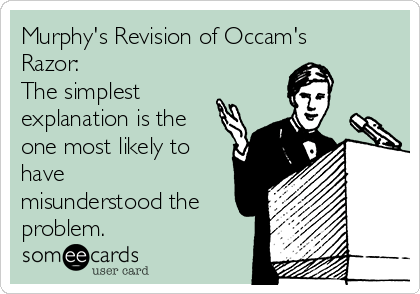
It is also fair to state that there is some criticism of Occam’s Razor, as this article, The Occam’s razor fallacy: the simplest solution is not always the correct one, indicates.
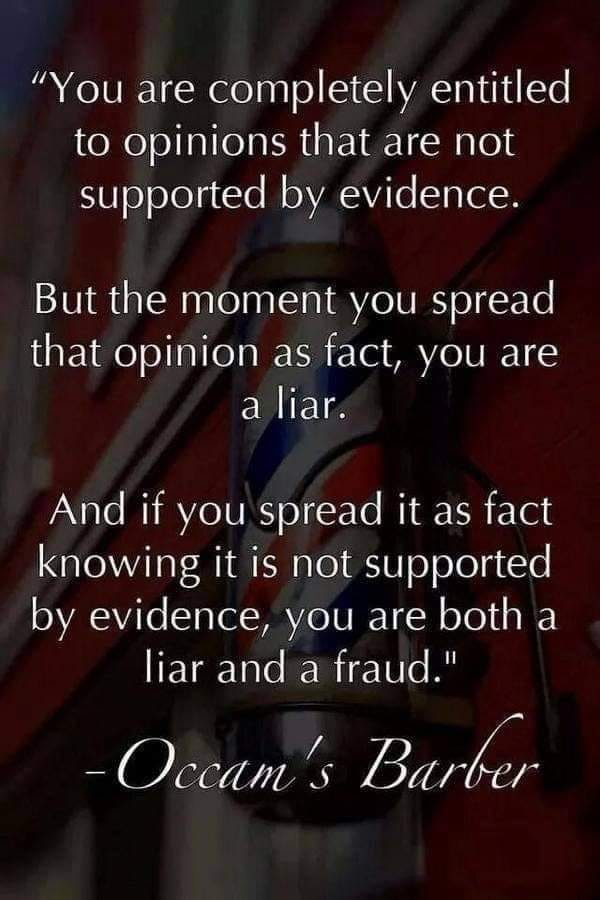
Finally, if you feel that Occam’s razor does not go far enough, there is always Occam’s barber:
This now makes 8 tools. You have the facts (1 of 10), you had a substantive debate (2 of 10), you’ve covered arguments from authority (3 of 10), you have several hypotheses (4 of 10), you aren’t overly attached to any one hypothesis, especially if it’s your own thought (5 of 10), you have the numbers (6 of 10) and, from the last post, you need to have every link in the chain working (7 of 10).
As a chain is only as strong as its weakest link, so the baloney detection kit is only as useful as all its components used together.
How strong are your components?!
PS: I love coffee. BuyMeACoffee, leave a message with a date and time and we can share it, remotely, at the same time, and think about the Cosmos.
In the meantime, take care of yourself and if you can, someone else, too, because as Adam Smith said, “we naturally desire not only to be loved but to be lovely”.
Contact Stargazing Guy for any copyright-related requests or queries @ stargazer1@stargazingguy.co.uk

 Stargazing Guy
Leave a reply to Carl Sagan’s “baloney detection kit” – blog 10 of 10 – Stargazing Guy Cancel reply