
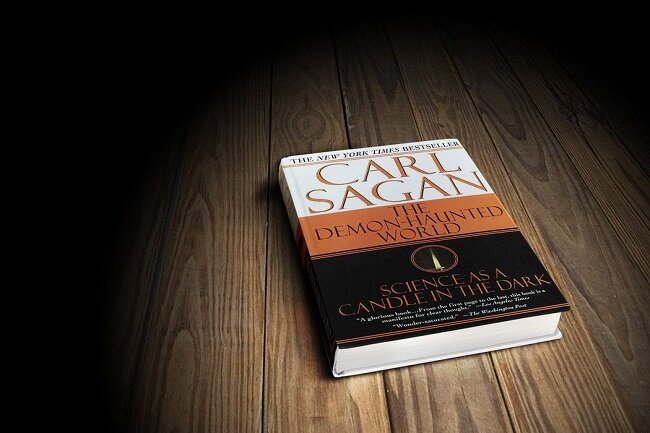
– Carl Sagan’s Fine Art of Baloney Detection, The Demon-Haunted World: Science as a Candle in the Dark
The opening quote, from Carl Sagan, for this series of blogs was:
The method of science, as stodgy and grumpy as it may seem, is far more important than the findings of science.
Science can be hard (can you explain quantum mechanics?), it often doesn’t seem to make sense (why does time slow the closer to the speed of light I travel?) and it always seems to be changing (dietary advice, knowledge of Covid-19, etc) – but that is science.
Three of my favourite authors have attempted to describe science and their quotes follow, first Sir Terry Pratchett, then Isaac Asimov and then Robert Heinlein:
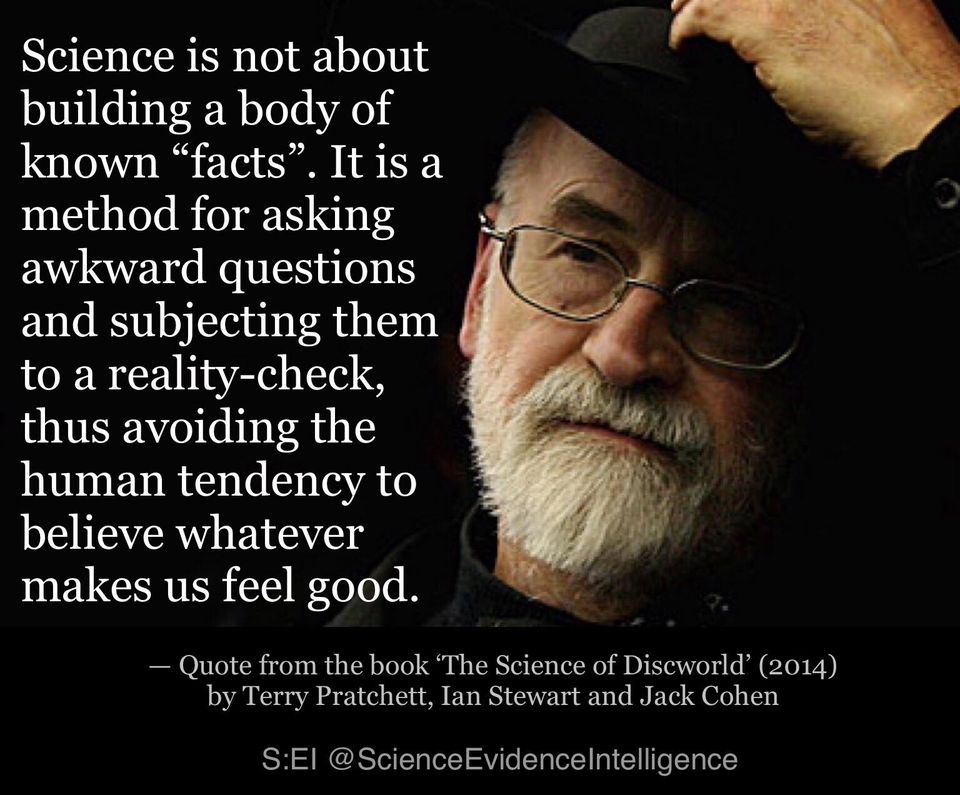
“Science is not about building a body of known ‘facts’. It is a method for asking awkward questions and subjecting them to a reality-check, thus avoiding the human tendency to believe whatever makes us feel good.”
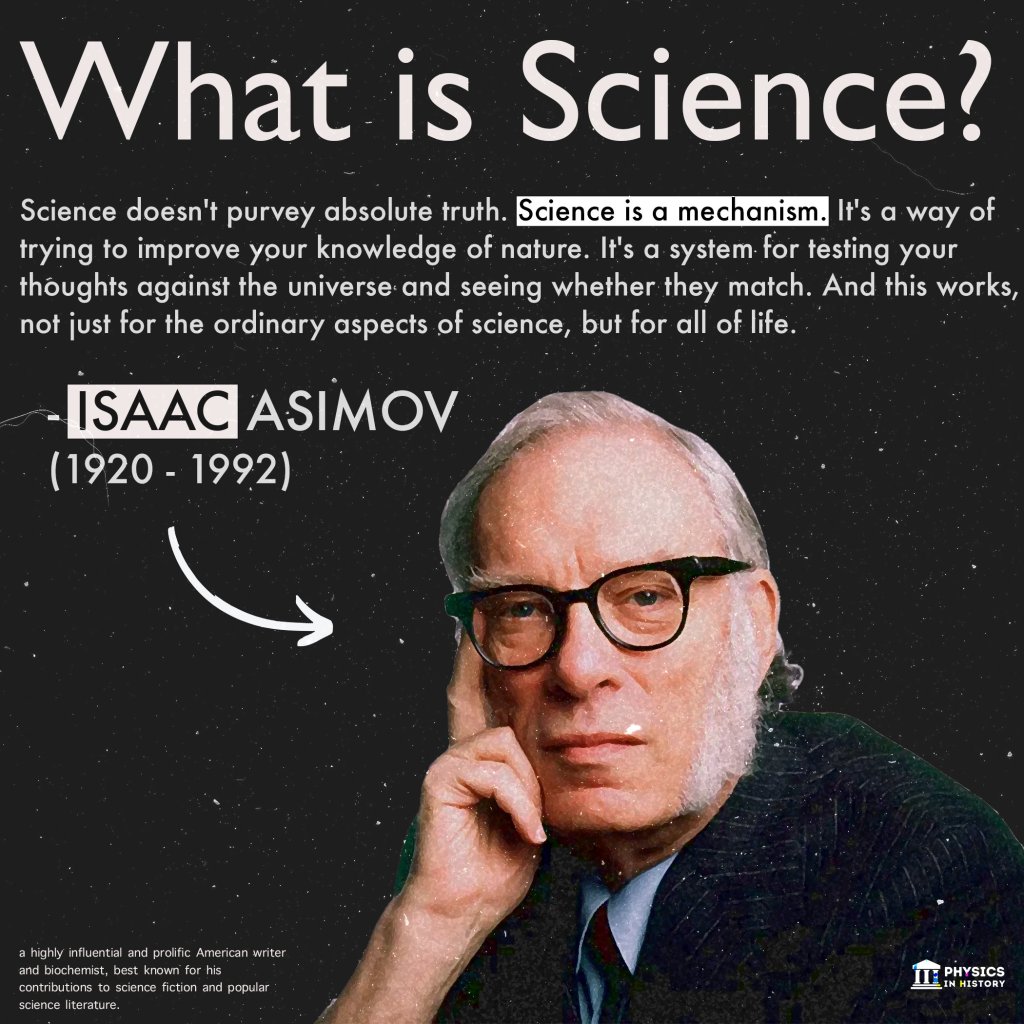
“Science doesn’t purvey absolute truth. Science is a mechanism. It’s a way of trying to improve your knowledge of nature. It’s a system for testing your thoughts against the universe and seeing whether they match. And this works, not just for the ordinary aspects of science, but for all of life.”
“What are the facts? Again and again and again – what are the facts? Shun wishful thinking, ignore divine revelation, forget what “the stars foretell,” avoid opinion, care not what the neighbors think, never mind the unguessable “verdict of history” – what are the facts, and to how many decimal places? You pilot always into an unknown future; facts are your single clue. Get the facts!”
As Carl Sagan said, “science is more than a body of knowledge. It’s a way of thinking. A way of sceptically interrogating the universe with a fine understanding of human fallibility. If we are not able to ask sceptical questions, to interrogate those who tell us that something is true, to be sceptical of those in authority, then we’re up for grabs for the next charlatan political or religious who comes ambling along.”
So here you have it, 9 cognitive tools and techniques that can be used to avoid falsehood and deception:
- The facts
- You had a substantive debate
- You’re careful about arguments from authority
- You have several hypotheses
- You aren’t overly attached to any one hypothesis, especially if it’s your own
- You have quantified, you have the numbers
- Every link in the chain has been tested, and works
- Occam’s Razor has been applied, carefully
- Your hypotheses can be falsified
By adopting the kit, we can all shield ourselves against clueless guile and deliberate manipulation, thanks to our brain, our common-sense and the judicious application of these tools.
Moving on from Sagan’s baloney detection kit the next series of blogs will be about unlearning and avoiding the most common pitfalls of common sense and showing us what not to do.
Sagan admonishes against the twenty most common and perilous ones — many rooted in our chronic discomfort with ambiguity — with examples of each in action.
The first two of these pitfalls will be covered in the next blog – Pitfalls of common sense 1 of 11.]
PS: I love coffee. BuyMeACoffee, leave a message with a date and time and we can share it, remotely, at the same time, and think about the Cosmos.
In the meantime, take care of yourself and if you can, someone else, too, because as Adam Smith said, “we naturally desire not only to be loved but to be lovely”.
Contact Stargazing Guy for any copyright-related requests or queries @ stargazer1@stargazingguy.co.uk

 Stargazing Guy
Leave a comment