

Today is the day where we highlight the risk to humanity of asteroids. This day was chosen to commemorate the “Tunguska Explosion”, which occurred this day in 1908 in Siberia.
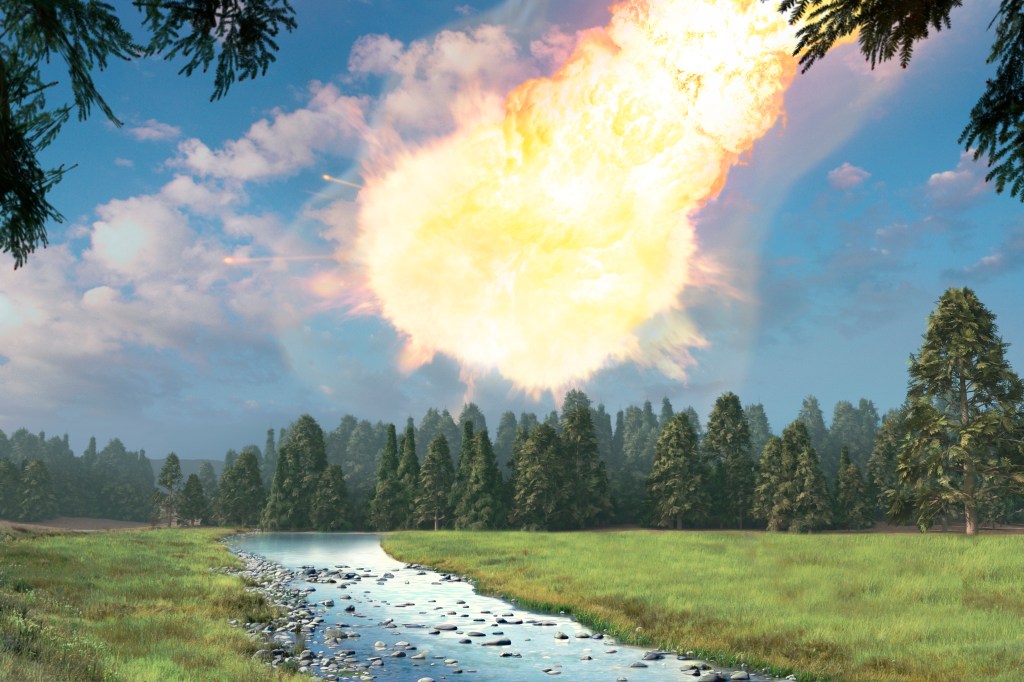
Asteroids are composed of rock and metal, and range in size from 1m to around 1,000km. Most are in the Asteroid Belt, which is about midway between Mars and Jupiter. The Asteroid Belt is mainly empty space, despite having millions of asteroids in it.
In modern times, asteroids have come to be seen as the solar system’s rubble, leftovers from its formation, but were still largely ignored until the late 20th century. Increasingly, they have been seen by scientists as objects worthy of study, by the public and governments as potential threats to be mitigated, and by space advocates as future resources.
Asteroid Day is a growing global movement to protect our planet, our families, and future generations from dangerous asteroids. It was established on 3 December 2014, with the relevant declaration signed by more than 100 astronauts, scientists.
The risk from asteroids (and meteoroids and comets) to humanity is ever present and there are several Earth-saving strategies being considered and some have started.

NASA (National Aeronautics and Space Administration) and ESA (European Space Agency) have developed a two-part kinetic impactor test mission. The first part is NASA’s and is known as DART (Double Asteroid Redirection Test). The second part is ESA’s and is known as Hera.
DART and Hera were conceived together as part of the international ‘Asteroid Impact Deflection Assessment’ collaboration. The two missions are valuable individually, but by being flown in concert their overall scientific and technological return has been significantly boosted.
The DART NASA mission collided with an asteroid (Dimorphos) on 26 September 2022.
Prior to DART’s impact, it took Dimorphos 11 hours and 55 minutes to orbit its larger parent asteroid, Didymos. The spacecraft’s impact altered Dimorphos’ orbit around Didymos by 32 minutes, shortening its orbit to 11 hours and 23 minutes. This measurement has a margin of uncertainty of approximately plus or minus two minutes.
Hera’s job is to perform high-resolution visual, laser and radio science mapping of the moon, which will be the smallest asteroid visited so far, to build detailed maps of its surface and interior structure, and better measure the variation is orbit.
The fact that the orbit was altered, albeit by a small amount, proves that humanity can protect itself from the risks posed, as long as there is sufficient warning.
ESA also run the Near Earth Orbit Coordination Centre (NEOCC), which is the operational centre of ESA’s Planetary Defence Office (PDO) within the Space Safety Programme (S2P).
Its aim is to coordinate and contribute to the observation of small Solar System bodies to evaluate and monitor the threat coming from Near-Earth Objects (NEOs).
That said, there is probably little to worry about. The likelihood of a dangerous asteroid striking the Earth during any given year is low. Because some past mass extinction events have been linked to asteroid impacts, and don’t forget Tunguska, finding and cataloguing those asteroids that may one day affect life on Earth, has started.
Pictured below are the orbits of the over 1,000 known Potentially Hazardous Asteroids (PHAs). These identified asteroids are over 140 meters across and will pass within 7.5 million kilometres of Earth — about 20 times the distance to the Moon. Although none of them will strike the Earth in the next 100 years – not all PHAs have been discovered, and past 100 years, many orbits become hard to predict.
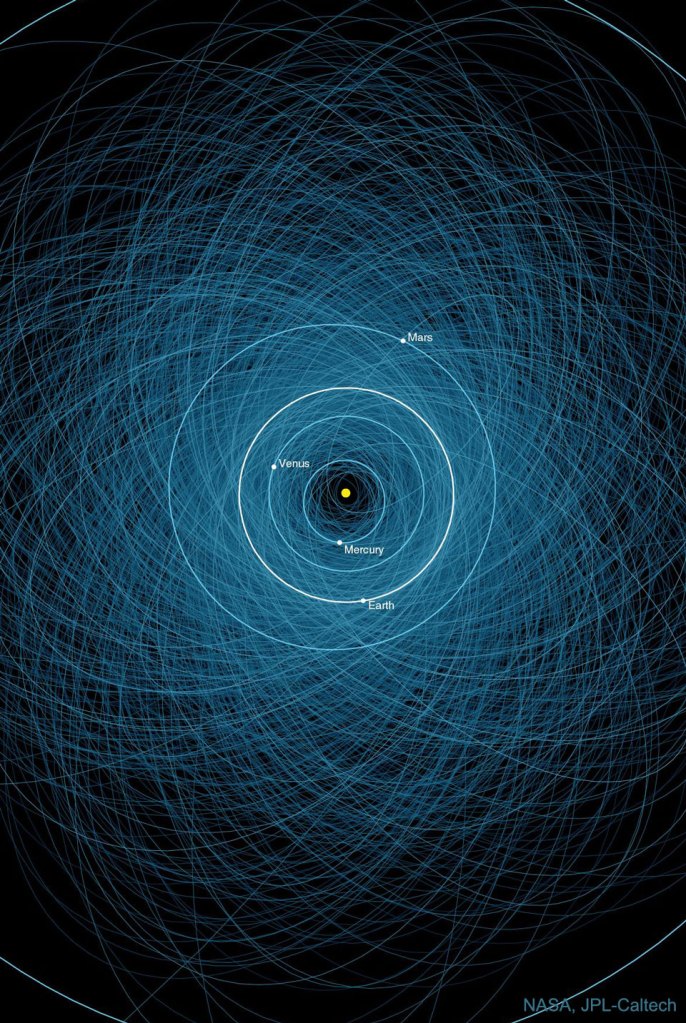
Credit: Orbits of Potentially Hazardous Asteroids (APOD: 2023 Jun 30)
Illustration Credit: NASA, JPL-Caltech
https://apod.nasa.gov/apod/ap230630.html
Were an asteroid of this size to impact the Earth, it could raise dangerous tsunamis, or huge clouds of dust and smoke and potential toxins and climate changing gases.
Meteoroids of much smaller size strike the Earth every day, usually pose no danger, and sometimes create memorable fireball and meteor displays.
Do you want to take part in protecting Earth from NEOs?
The UK Meteor Network is a citizen science project that is collecting meteor data to help scientists study our solar system.
Hundreds of informational and artistic events will take place today on all five continents of the world, on the occasion of Asteroid Day, with the participation of top science personalities – and have a happy Asteroid Day!
PS: I love coffee. BuyMeACoffee, leave a message with a date and time and we can share it, remotely, at the same time, and think about the Cosmos.
In the meantime, take care of yourself and if you can, someone else, too, because as Adam Smith said, “we naturally desire not only to be loved but to be lovely”.
Contact Stargazing Guy for any copyright-related requests or queries @ stargazer1@stargazingguy.co.uk
 Stargazing Guy
Leave a comment