

For a change of pace, here are several of, the now famous images, taken by the JWST, since its launch on 25 December 2021 at 12:20 pm GMT. JWST took off from the Guiana Space Centre, also called Europe’s Spaceport, a European spaceport to the northwest of Kourou in French Guiana, a region of France in South America.
First of all this landscape of “mountains” and “valleys” speckled with glittering stars is actually the edge of a nearby, young, star-forming region called NGC 3324 in the Carina Nebula. Captured in infrared light by the JWST, this image reveals for the first time previously invisible areas of star birth:
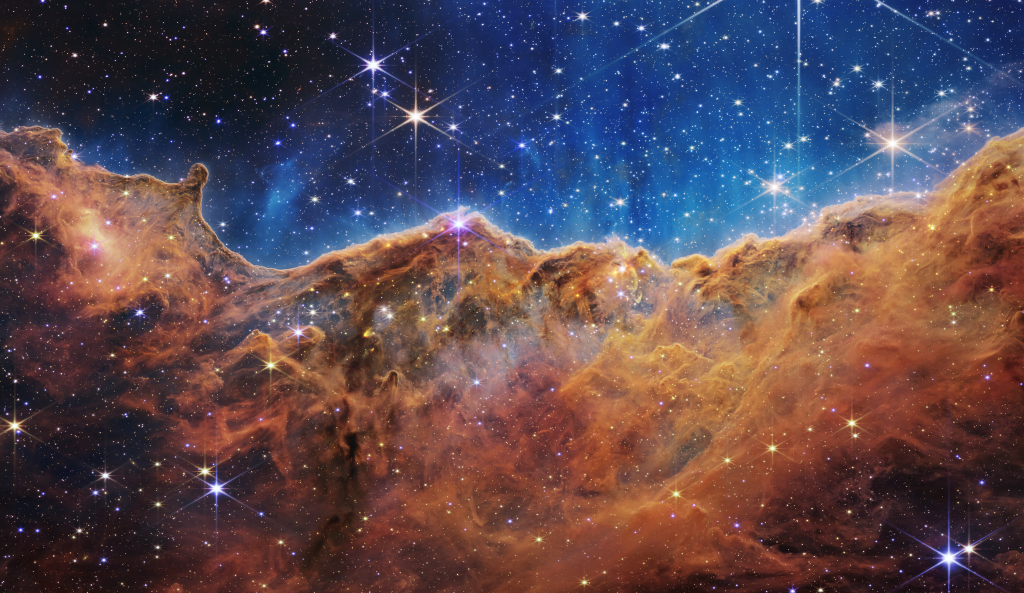
You can either bask in the glory of this image and/or learn more here. Remember, this image is captured in infrared light and reveals for the first time previously invisible areas of star birth.
Next is this image of galaxy cluster SMACS 0723, known as Webb’s First Deep Field:
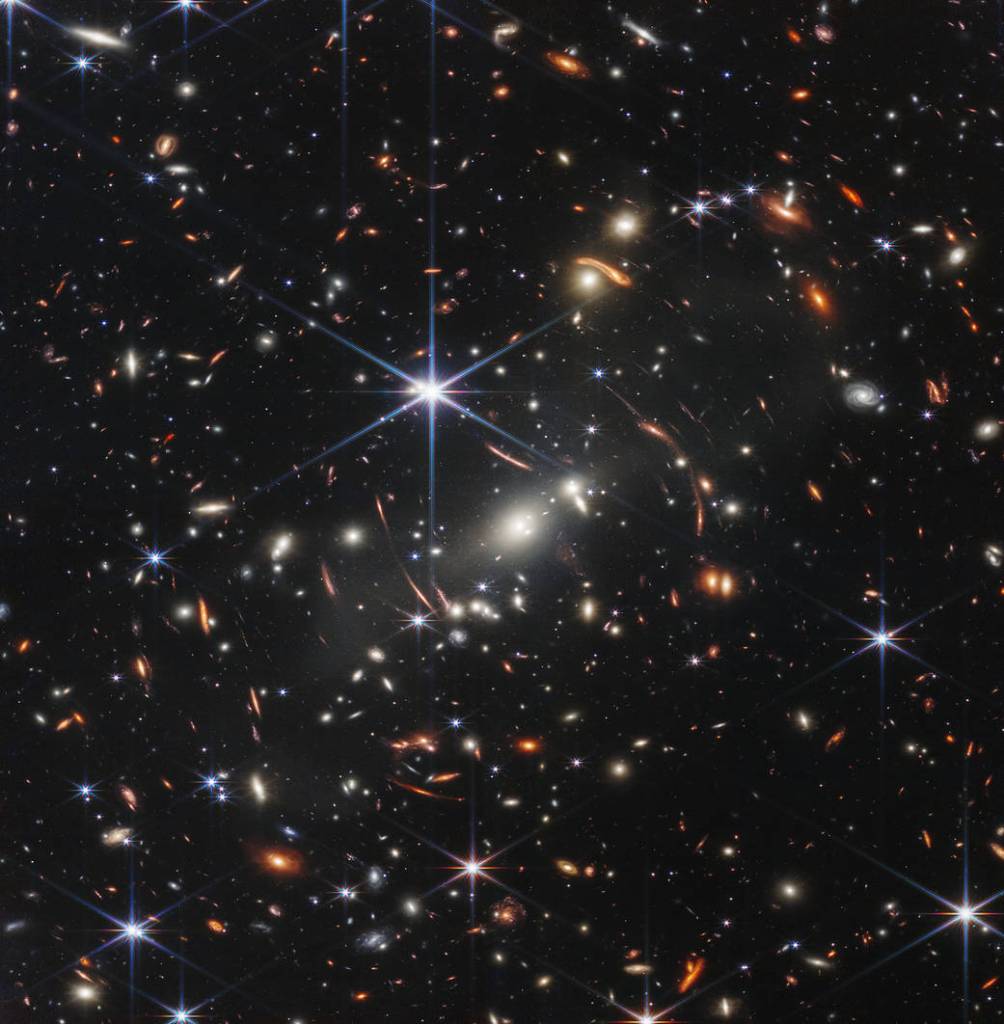
For much more information head to the NASA website.
After an exploration of the Milky Way Galaxy and the wider universe lets bring it closed to home.
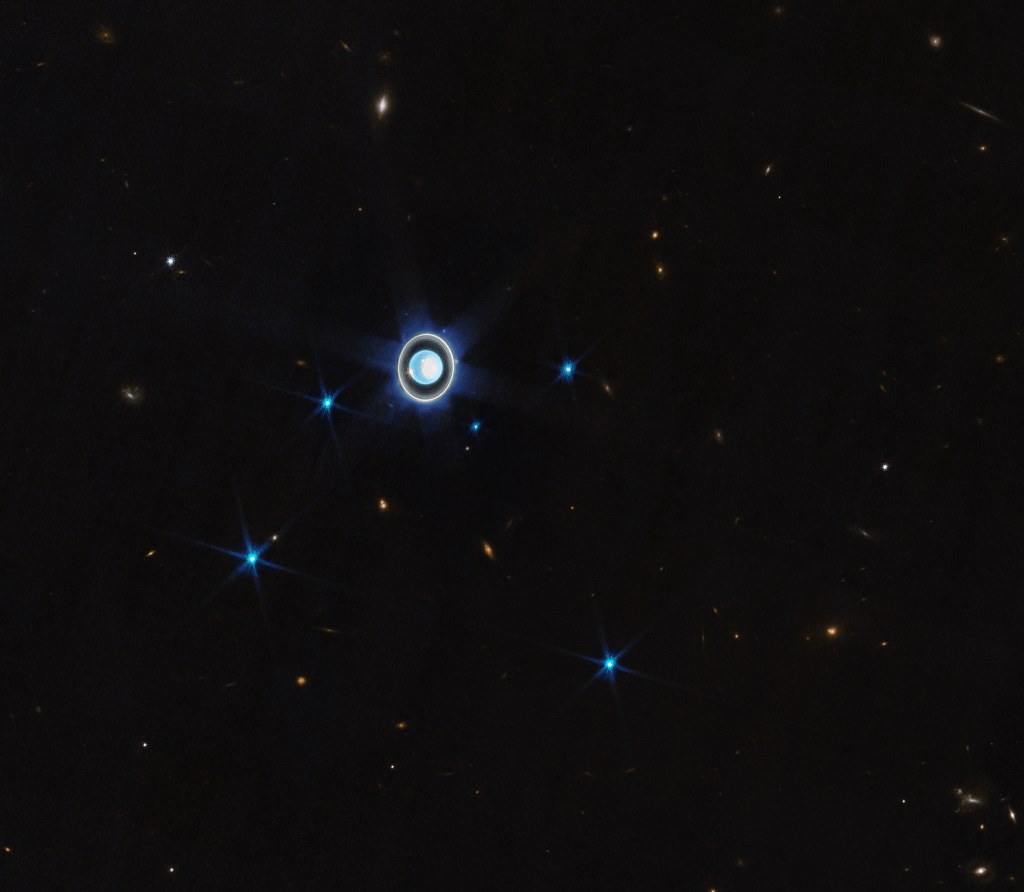
Here are some amzaing images of Uranus and various satellites:
… and a close up of the rings:
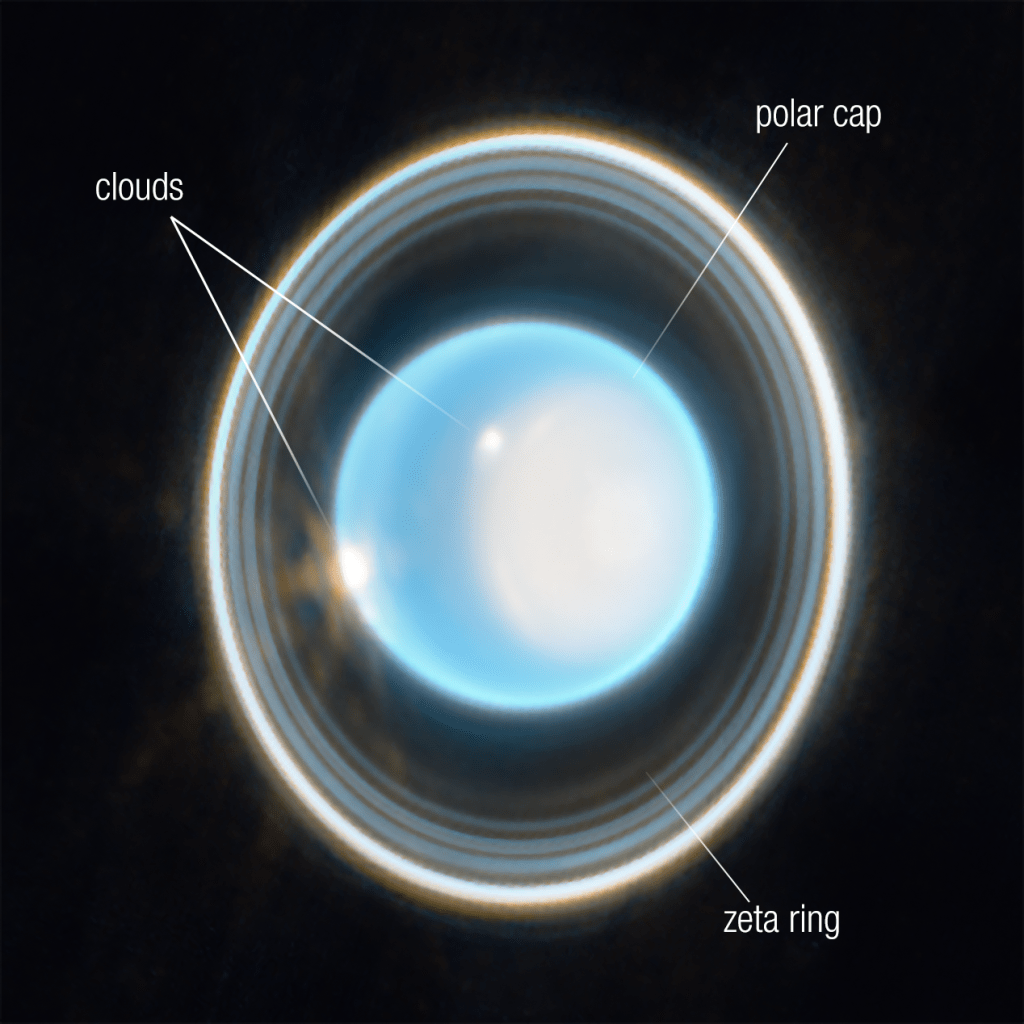
Information about these images – and many more – can be found here.
Remember, these images are real. They were taken using infrared wavelengths, which the human eye cannot see. The raw data goes through several stages and adjustments including assigning each infrared filter a color from the visible range of the spectrum—the shortest wavelengths get blue, and longer wavelengths move to green and red. The result is to provide a truer representation of what these cosmic objects look like than our relatively limited eyes could do.
This clip from NBC News of an interview with astrophysicist Neil deGrasse Tyson explains it far better than my comments (from about 3:40 minutes, although the whole clip is very insightful):
To finish … do you know where the JWST is located in space? It’s NOT in earth orbit. JWST’s final orbit is around the second Sun-Earth Lagrange point, or L2, nearly 1 million miles (1.51 million kilometers) away from the Earth, and you can track it’s current status, using NASA’s “Where Is Webb?” tracker.
All images are courtesy of NASA.
PS: I love coffee. BuyMeACoffee, leave a message with a date and time and we can share it, remotely, at the same time, and think about the Cosmos.
In the meantime, take care of yourself and if you can, someone else, too, because as Adam Smith said, “we naturally desire not only to be loved but to be lovely”.
Contact Stargazing Guy for any copyright-related requests or queries @ stargazer1@stargazingguy.co.uk
 Stargazing Guy
Leave a comment