
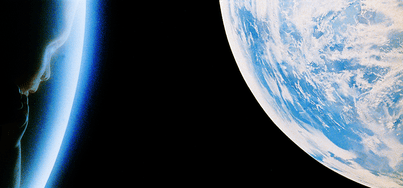
– Professor Brian Cox, Wonders of the Universe, BBC
Why are we here? Where do we come from? These are the most enduring of questions. And it’s an essential part of human nature to want to find the answers.
We can trace our ancestry back hundreds of thousands of years to the dawn of humankind. But in reality, our story extends far, further back in time. Our story starts with the beginning of the universe. It began 13.7 billion years ago, and today, it’s filled with over a hundred billion galaxies, each containing hundreds of billions of stars.
In this series, I want to tell that story, because ultimately, we are part of the universe, so its story is our story.
— Professor Brian Cox’s opening narration to Wonders of the Universe
One of the most fundamental points that space communicators like to make – it’s such an awe-inspiring point – is we are star stuff.
Not only is it awe-inspiring it’s also comforting to know that we never really die (while the universe continues and your atoms still survive). As the first law of thermodynamics tells us not a bit of you is gone; you’re just less orderly.
There is more detail about this take on the science of death by Aaron Freeman’s eulogy from a physicist:
You want a physicist to speak at your funeral. You want the physicist to talk to your grieving family about the conservation of energy, so they will understand that your energy has not died. You want the physicist to remind your sobbing mother about the first law of thermodynamics; that no energy gets created in the universe, and none is destroyed. You want your mother to know that all your energy, every vibration, every Btu of heat, every wave of every particle that was her beloved child remains with her in this world. You want the physicist to tell your weeping father that amid energies of the cosmos, you gave as good as you got.
And at one point you’d hope that the physicist would step down from the pulpit and walk to your brokenhearted spouse there in the pew and tell him that all the photons that ever bounced off your face, all the particles whose paths were interrupted by your smile, by the touch of your hair, hundreds of trillions of particles, have raced off like children, their ways forever changed by you. And as your widow rocks in the arms of a loving family, may the physicist let her know that all the photons that bounced from you were gathered in the particle detectors that are her eyes, that those photons created within her constellations of electromagnetically charged neurons whose energy will go on forever.
And the physicist will remind the congregation of how much of all our energy is given off as heat. There may be a few fanning themselves with their programs as he says it. And he will tell them that the warmth that flowed through you in life is still here, still part of all that we are, even as we who mourn continue the heat of our own lives.
And you’ll want the physicist to explain to those who loved you that they need not have faith; indeed, they should not have faith. Let them know that they can measure, that scientists have measured precisely the conservation of energy and found it accurate, verifiable and consistent across space and time. You can hope your family will examine the evidence and satisfy themselves that the science is sound and that they’ll be comforted to know your energy’s still around. According to the law of the conservation of energy, not a bit of you is gone; you’re just less orderly. Amen.
– Aaron Freeman
If this resonates with you but you worry about loved ones and wanting to be together after death, consider these words from Ann Druyan, Carl Sagan’s wife, on their view of life before death:
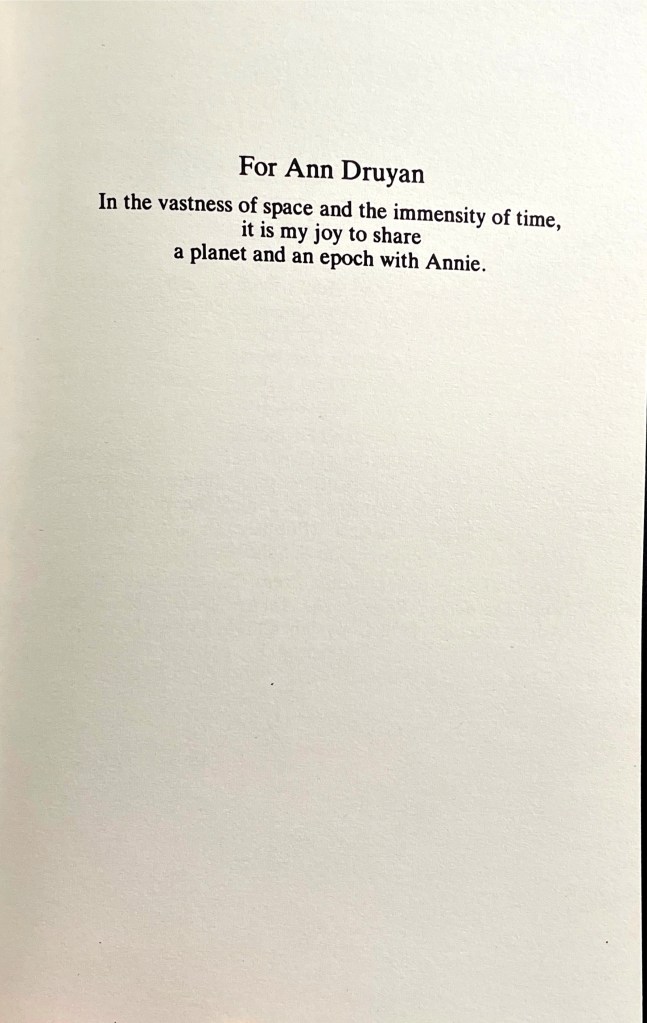
When my husband died, because he was so famous and known for not being a believer, many people would come up to me — it still sometimes happens — and ask me if Carl changed at the end and converted to a belief in an afterlife. They also frequently ask me if I think I will see him again. Carl faced his death with unflagging courage and never sought refuge in illusions. The tragedy was that we knew we would never see each other again. I don’t ever expect to be reunited with Carl. But, the great thing is that when we were together, for nearly twenty years, we lived with a vivid appreciation of how brief and precious life is. We never trivialized the meaning of death by pretending it was anything other than a final parting. Every single moment that we were alive and we were together was miraculous-not miraculous in the sense of inexplicable or supernatural. We knew we were beneficiaries of chance. . . . That pure chance could be so generous and so kind. . . . That we could find each other, as Carl wrote so beautifully in Cosmos, you know, in the vastness of space and the immensity of time. . . . That we could be together for twenty years. That is something which sustains me and it’s much more meaningful. . . . The way he treated me and the way I treated him, the way we took care of each other and our family, while he lived. That is so much more important than the idea I will see him someday. I don’t think I’ll ever see Carl again. But I saw him. We saw each other. We found each other in the cosmos, and that was wonderful
Ann Druyan, The Skeptical Inquirer, Volume 27, No. 6, November / December 2003
Here is the dedication Carl Sagan wrote in his bestselling book Cosmos:
PS: I love coffee. BuyMeACoffee, leave a message with a date and time and we can share it, remotely, at the same time, and think about the Cosmos.
In the meantime, take care of yourself and if you can, someone else, too, because as Adam Smith said, “we naturally desire not only to be loved but to be lovely”.
Credit for opening image: 2001: A Space Odyssey, The Star Child, Warner Bros. Entertainment Inc.
After David Bowman discovers the Jovian Monolith, he travels through a Star Gate of unknown space and time. The Star Gate brings Bowman to a replica of a Hotel Room. In this space, time seems to excel or jump toward the final days of Bowman’s life. Like a dream, he sees himself at older life stages of himself until he assumingly expires. Bowman is then reincarnated into a Star Child, who then transforms into a type of energy being. With thanks to https://2001.fandom.com/wiki/Main_Page for the description.
 Stargazing Guy
Leave a comment