

– Misattributed to Ferdinand Magellan (4 February 1480 – 27 April 1521)
Yes, another misattribution!
Surely a misattribution of the moment: Magellan didn’t say it, but it’s still brilliant, “shadow on the Moon”.
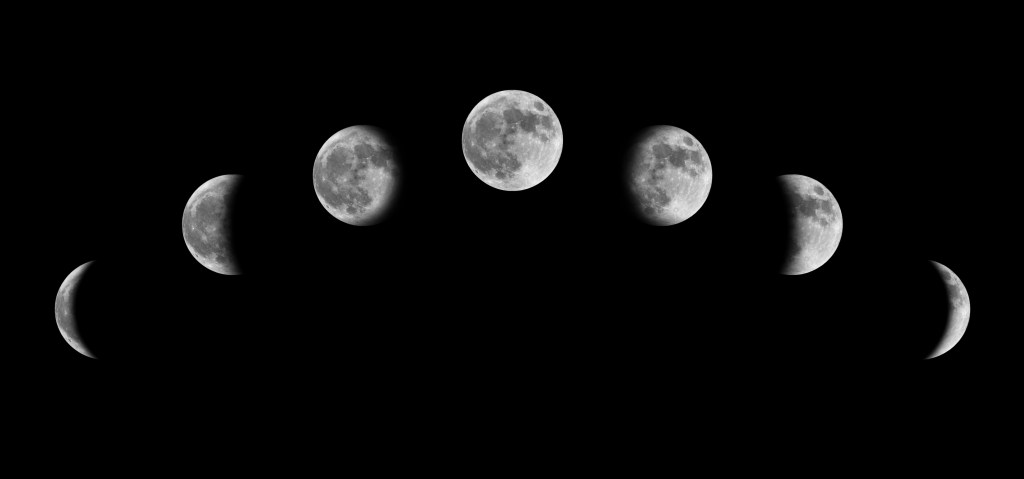
Credit: https://depositphotos.com/64932777/stock-photo-moon-phases-from-crescent-to.html
So, who did say it? Also, is it true, what can the earth’s shadow on the moon tell you about its shape?
Wikiquote finds reference to misquoting as far back as the middle of the 19th century – but still doesn’t answer the question, who did say it?!
Even in the mid-19th century it was probably a very brave soul to cast aspersions at the church (especially if wanting to hold office) so it may not be surprising that the original quote may be from someone keeping a low profile?
Moving on to the earth’s shadow – first of all, what is it?
Like all worlds orbiting a sun, the earth casts a shadow. It extends some 870,000 miles (1.4 million km) into space. And you can see it – easily – twice a day, just after sunset and before sunrise. In fact, you’ve probably already seen earth’s shadow, many times, as day changes to night.
That’s because night itself is a shadow. When night falls, you’re standing within the shadow of earth.
Earth’s shadow extends so far into space that it can touch the moon. That’s what a lunar eclipse is. It’s the moon within earth’s shadow.
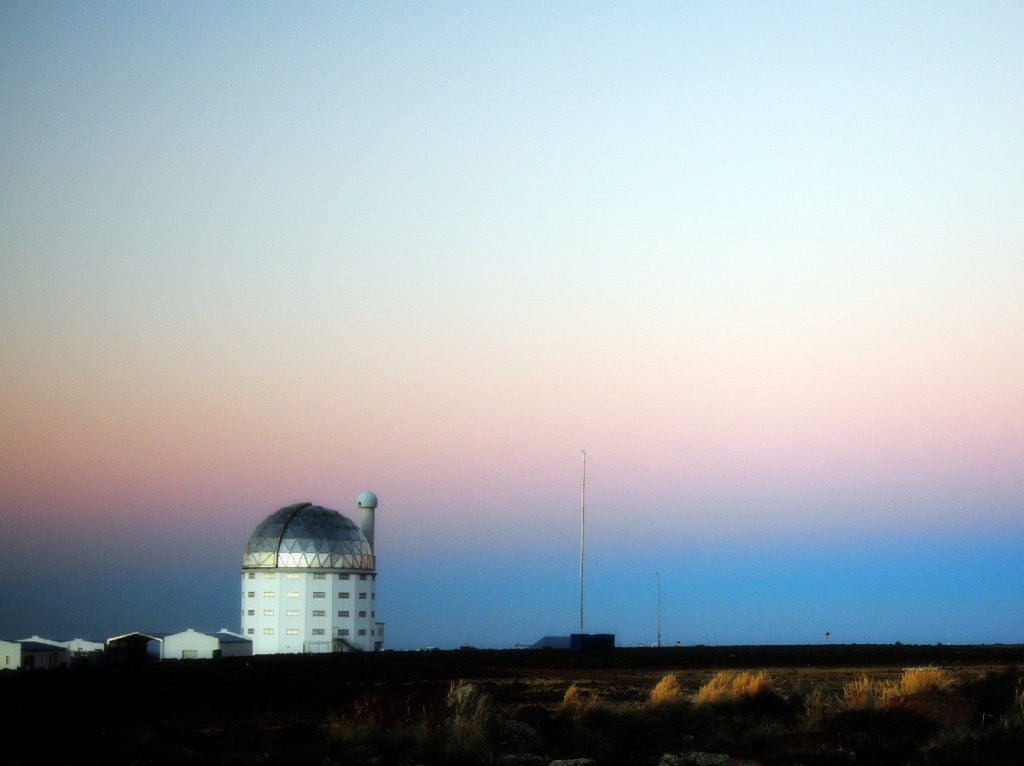
Credit: Southern African Large Telescope – https://upload.wikimedia.org/wikipedia/commons/1/10/SALT_and_the_Belt_of_Venus.jpg
Bottom line: Look for earth’s shadow in both the evening and morning sky. It’s a blue-grey darkness in the direction opposite the sun, darker than the twilight sky. The pink band above the shadow – in the east after sunset, or west before dawn – is the Belt of Venus.
The Belt of Venus is, in fact, inspired by the girdle which was supposedly worn by the goddess Venus, and which might resemble the pinkish arch, at twilight.
All of which goes to prove the earth is a disk or a plate-like object, surely?

Credit: https://twitter.com/sehnaoui/status/893860462022074368
But … the shadow of Earth on the Moon during a lunar eclipse is always a dark circle that moves from one side of the Moon to the other (partially grazing it during a partial eclipse). The only shape that casts a round shadow no matter which direction it is pointed is a sphere, and the ancient Greeks deduced that this must mean Earth is spherical.
The effect could be produced by a disk that always faces the Moon head-on during the eclipse, but this is inconsistent with the fact that the Moon is only rarely directly overhead during an eclipse. For each eclipse, the local surface of Earth is pointed in a different direction. The shadow of a disk held at an angle is an oval, not a circle as is seen during the eclipse. The idea of Earth being a disk is also inconsistent with the fact that a given lunar eclipse is only visible from half of Earth at a time.
Therefore, Magellan (or the mystery author) was correct about the “shadow on the moon”.
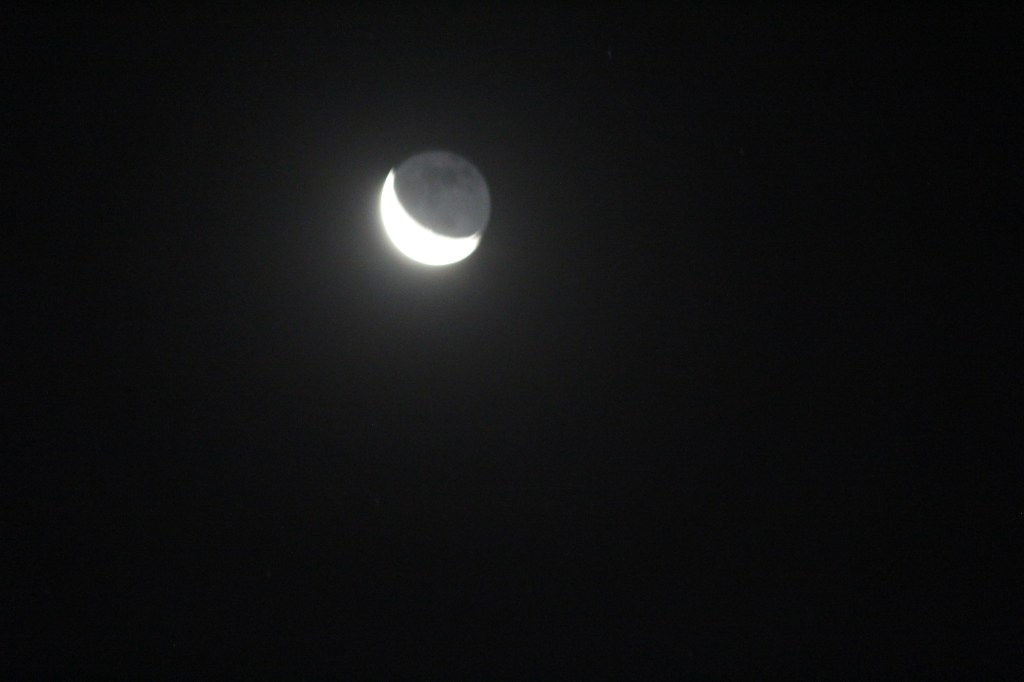
Credit: https://upload.wikimedia.org/wikipedia/commons/a/ab/Moon%27s_Shadow.jpg
Shadows, more persuasive than the church. Thanks, Ferdinand!
PS: I love coffee. BuyMeACoffee, leave a message with a date and time and we can share it, remotely, at the same time, and think about the Cosmos.
In the meantime, take care of yourself and if you can, someone else, too, because as Adam Smith said, “we naturally desire not only to be loved but to be lovely”.
 Stargazing Guy


Leave a comment